Sejo took the throne of Carr and took the position. As it is widely believed that he was not just deposed, but that he killed a poison, he may wonder what kind of personality he is, but Sejo was surprisingly a family man and a man of loyalty.
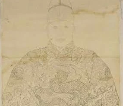
First of all, he was a great wife. He cared so much about Queen Jeonghee (preparation for future self-reflection) that he didn't turn his attention to other women. At that time, it wasn't considered a bad thing for the king to enter the concubine, but only one concubine was Sejo. Even this was taken as a concubine before he ascended the throne. Even if the servants asked me to take the concubines, I refused, saying I didn't like feminine charms.
The story of King Sejo's concubine is a little interesting. The only concubine was a woman named Deokjung, whose son died early and King Sejo became less interested, making me feel lonely and sick. Finally, the first object of the scandal was the eunuch of Songjung. He secretly sent a letter confessing his love.
As it was done by the king's concubine, the palace was turned upside down, and Deokjung was deprived of his wife's position and became unsuried. But Deokjung must have been really hungry for love, causing another scandal.This time, the scale gets bigger. The target was King Sejo's nephew, King Seong-gun Lee Jun. It was a storytelling that was like a crazy drama, but it was recorded in the Annals (Sept. 5, 2011).
Eventually, King Sejo was properly beaten up and put to death not only Deokjung but also those who delivered her letter to her constituents. It's unfortunate for Deokjung, who was not loved.
Sejo loved alcohol and held a lot of feasts, but he usually called a gisaeng to the feast. But Sejo hated the gisaeng, so the gisaengs who participated in the feast were white-painted so that they couldn't recognize their faces.
On the other hand, Queen Jeonghee was always present when she went outside with all her heart, and many people praised the two. Queen Jeonghee was also a very wise woman. He opposed the appointment of his wife-in-law, emphasizing fairness in personnel management, and gave generous policy advice. When King Sejo discusses state affairs, he often says, "My wife is like this..."
At the same time, King Sejo was a man of righteousness. King Taejong, who ascended to the throne through a similar process to King Sejo, had many meritorious men chosen for political purposes. The process even makes you look mean, while King Sejo favored the meritorious.
The only exception is Yangjeong. Yangjeong was a key figure of King Sejo who contributed to killing Kim Jong-seo during the Gyeyujeongnan. The problem is that this person urged King Sejo to step down at a drinking party. In response, King Sejo immediately made a fuss, saying, "When did I want to be the king?" and his servants objected, saying, "This is nonsense," and the Crown Prince cried and Yangjeong urged him to step down, saying, "This is what the king's order is like." Eventually, Yangjeong was beheaded four days after the incident.
For your information, there are two other times in Joseon history when a servant told the king to step down from the throne. One time during the Japanese invasion of Korea, during the Japanese invasion of Korea, the servants carefully mentioned the abdication of the throne. Another example is that after the Hague Secretariat incident, Lee Wan-yong went crazy and forced Gojong, who planned the Hague Secretariat, to step down from the throne.
The example of King Gojong and King Seonjo was a state of whether the country would collapse or not, but it was a time when King Sejo's authority was firmly established when Yangjeong worked. It's not unreasonable to die.
In any case, except for these Yangjeong examples, contributors such as Han Myeong-hoe and Shin Sook-ju were given preferential treatment until King Se-jo died. Along the way, King Se-jo briefly showed a movement of restraint, but it was not enough. Eventually, contributors were awarded a huge amount of land by King Se-jo, established themselves as key figures in politics, and later grew into a Hungu faction.
This aspect of King Sejo may be seen as a moral aspect of caring for his supporters, but the Hungu faction, which gained enormous power, takes the steps of corruption and has a profound negative impact on the development of Joseon.
In the end, leadership assessments cannot be made on a personal level. Even if an individual has advantages, such as a good family, a frugal life, or caring for the people around him, the assessment is bound to be made from a broader perspective.